10 Weirdest Museums You Can Actually Visit
By Milo Marsh ·
Image: Sedlec Ossuary interior 2.JPG by BrokenSphere, via Wikimedia Commons, licensed under CC BY-SA 3.0.
Somewhere between the Louvre and a garage sale sits a category of institution that nobody planned for. One person gets obsessed. The obsession outgrows the house. Two decades later there is a ticket desk, a gift shop, and a volunteer explaining the difference between 2,400 kinds of barbed wire to a family who stopped for gas.
We went hunting for the strangest museums open right now, with real addresses and real hours. No urban legends. Nothing that quietly closed in 2019 and left its website running. Ten collections devoted to subjects so narrow they move your eyebrows unbidden. Without further ado.
1. The Icelandic Phallological Museum
Reykjavík, founded in 1997 by a retired history teacher named Sigurður Hjartarson, who was handed a bull’s pizzle as a boy in the 1950s and never really recovered. The collection runs past 300 specimens from more than 100 mammal species. Scale is the startling part. One case holds a sperm whale tip at 170 centimetres, another a hamster bone of two millimetres that needs a magnifying glass. Twenty-two exhibits are attributed to creatures of Icelandic folklore, and the labels handle that with a straight face. A human specimen finally arrived in 2011 from a 95-year-old donor. The founder’s son runs the place now.
2. The Museum of Broken Relationships
Two Zagreb artists, Olinka Vištica and Dražen Grubišić, broke up in 2003 and joked about what to do with the shared debris. In 2006 they stopped joking. The permanent museum opened in October 2010 in Zagreb’s Upper Town, the first privately owned museum in the city, and by May 2011 it had taken the Kenneth Hudson Award as the most innovative museum in Europe. Roughly 3,500 donated objects, each with an anonymous story card. The famous one is an axe, sent in by a Berlin woman who used it to reduce her departing lover’s furniture to kindling. Adult admission is nine euros, and you can donate your own wreckage through the museum’s site.
3. The Meguro Parasitological Museum
Tokyo, 1953, founded by Dr. Satoru Kamegai. It takes no government money and charges nothing at the door. Two floors, 300 specimens on display, another 60,000 in the reference collection downstairs. The headline exhibit is a tapeworm of nearly nine metres, grown over roughly three months inside a 40-year-old man who ate the wrong trout. More than 50,000 people come through every year, which for a building the size of a dentist’s office is serious foot traffic. The gift shop sells phone straps with real parasites set in acrylic. We will not talk you out of one.
4. The Museum of Bad Art
In 1993 an antiques dealer named Scott Wilson pulled a painting from between two trash cans on a Boston curb. He wanted the frame. His friend Jerry Reilly insisted on keeping what was inside it, a portrait of an elderly woman seated in a field of flowers, and MOBA was born. More than 700 works sit in the permanent collection, of which 25 to 35 hang at a time. In 1996 a piece called “Eileen” was stolen off the wall, the museum posted a $6.50 reward, later raised it to $36.73, fielded a $5,000 ransom demand a decade later, and got the painting back in 2006 for nothing. The gallery now sits inside Dorchester Brewing Co. on Massachusetts Avenue, free, open daily from 11:30am. Sincere human failure still beats the machine-made kind.
5. The Sulabh International Museum of Toilets
New Delhi, opened in 1992 by Dr. Bindeshwar Pathak, a sanitation reformer who went on to win the Stockholm Water Prize in 2009. Exhibits arrive from about 50 countries and cover roughly 4,500 years, running from Harappan drainage systems through a medieval travelling commode disguised as a treasure chest, replica chamber pots in gold and silver credited to Roman emperors, and Sir John Harington’s 1596 flush design. Some of the display boards carry poetry. About toilets. It opens 10am to 5pm on Palam-Dabri Marg, closed Sundays, and it is played entirely straight, because Pathak built it to argue that sanitation is a public health emergency.
6. The Kansas Barbed Wire Museum
La Crosse, Kansas calls itself the Barbed Wire Capital of the World and has the receipts. The museum started in 1970 in a small storefront downtown, moved into a purpose-built building by 1990, and added a wing in 2004 for the Antique Barbed Wire Society headquarters. On the walls are over 2,400 distinct forms of wire and 500 varieties of the tools that made and strung it. There is a Barbed Wire Hall of Fame. There are old liniments sold to ranchers whose animals lost an argument with a fence. Admission is free, and on the first weekend of May collectors converge for the Barbed Wire Festival to trade samples with the intensity of a card show.
7. The CupNoodles Museum
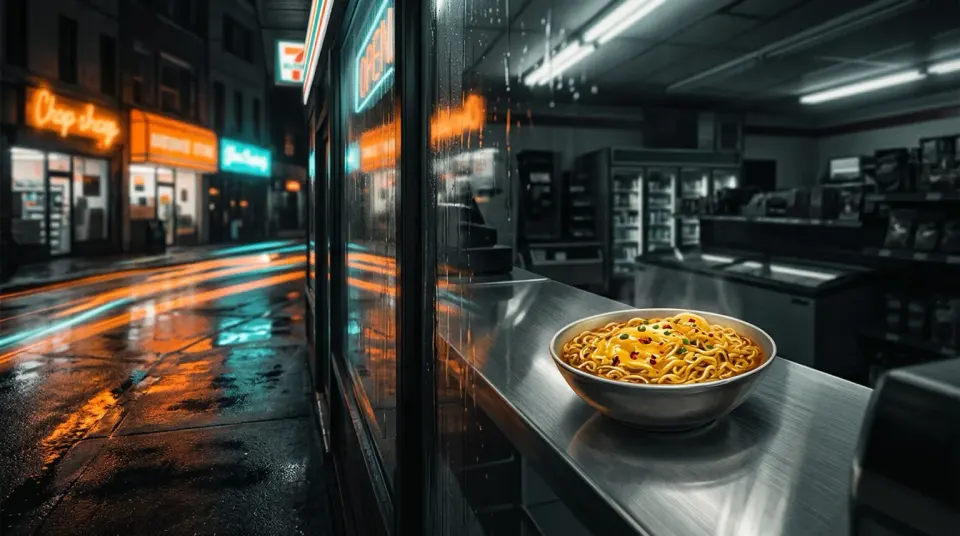
Momofuku Ando invented Chicken Ramen in a backyard shed in Ikeda, Osaka in 1958, then followed it with Cup Noodles in 1971 after watching Americans break his noodle bricks into paper cups. Yokohama built him four floors. Admission is 500 yen for adults and free for high school students and younger, the cheapest ticket on this list. The draw is the My CUPNOODLES Factory, another 500 yen, where you decorate a blank cup with markers and then watch the machine drop the cup upside down over the noodle block rather than the other way round, which is the packing trick Ando worked out in the first place. The original site in Ikeda charges nothing at all.
8. The Avanos Hair Museum
Under a pottery workshop in Avanos, in Cappadocia, is a cave room carpeted floor to ceiling in human hair. The potter Galip Körükçü started it in 1979 when a departing friend cut off a lock as a keepsake, a customer asked about it, and the customer then offered her own. It never stopped. More than 16,000 samples hang there now, each pinned up with the donor’s name and address, and the collection earned a Guinness World Records listing in 1998. Körükçü periodically draws tags at random and brings those donors back to Cappadocia at his own expense for pottery lessons. Entry ran 50 lira in 2024, waived if you buy something upstairs.
9. The Vent Haven Museum
Fort Mitchell, Kentucky, five miles south of Cincinnati, holds more than 1,000 ventriloquist figures from 20 countries. William Shakespeare Berger, a Cincinnati businessman and hobbyist ventriloquist, started buying them around 1910 and kept going until he died in 1972, and the museum opened the next year. Anyone who has seen the Twilight Zone episode with the dummy will want a moment before entering the main room. It closed in 2021 for construction, raised $1.2 million, and reopened in May 2023 at double the size with a 60-seat theatre named for Jeff Dunham. Tours cost $15, run May through September, and must be booked ahead through the museum. Nobody wanders in.
10. MUSA, the Cancun Underwater Museum
The only entry here with no roof, no door and no ticket desk. Sculptor Jason deCaires Taylor founded MUSA in 2009 with Jaime González, and it now holds over 500 life-size figures across two galleries, Salón Manchones at eight metres deep for divers and snorkellers, and Salón Nizuc at four metres for snorkellers only. The centrepiece, “The Silent Evolution,” weighs 120 tonnes and gathers more than 400 figures cast from about 90 residents of Puerto Morelos, standing shoulder to shoulder on what used to be bare sand. The concrete is pH neutral on purpose. More than 2,000 juvenile corals have moved in, and the installation was sunk partly to pull diver traffic off the living reef nearby. Casting your neighbours in cement and sinking them offshore is a strange conservation programme, and it works, which puts it a few rungs above the usual experiments in making objects nobody asked for.
About the author
Milo Marsh
Hunting down the internet's most bizarre, stupefying, amazing and cool things for Moochly.